Best Seller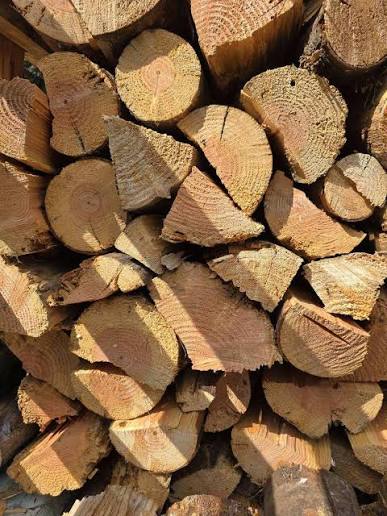
Firewood
Kiln-dried & seasoned beech, oak and pine firewood logs, cut and split to order for wholesale and export.
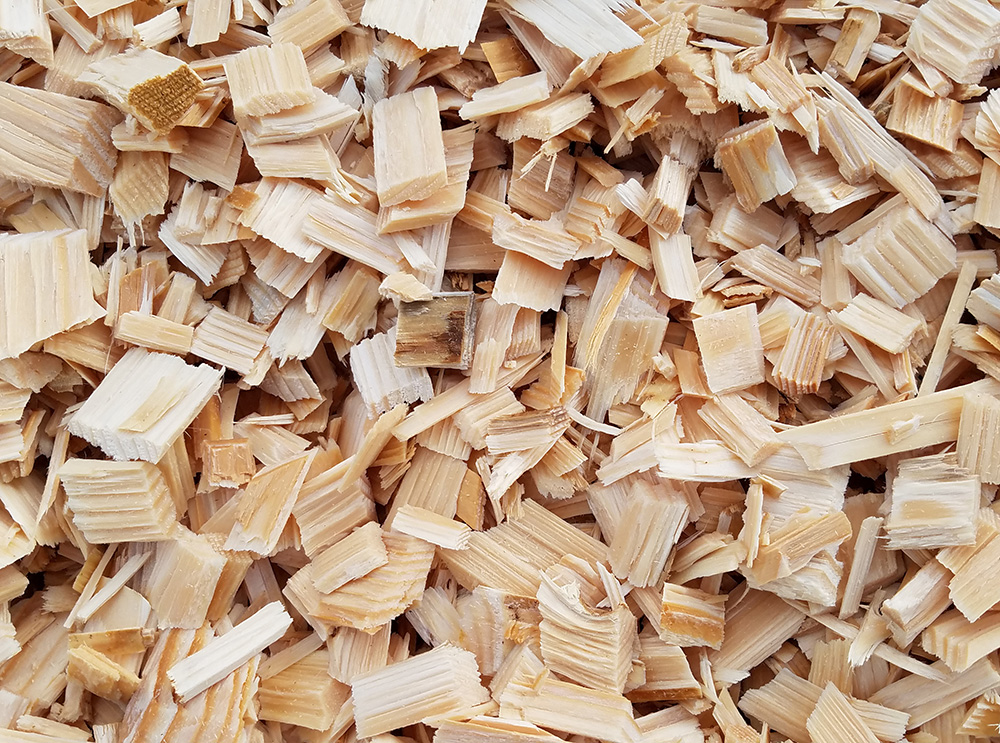
Uniform biomass and landscaping wood chips, screened to size for boilers, mulching and animal bedding.
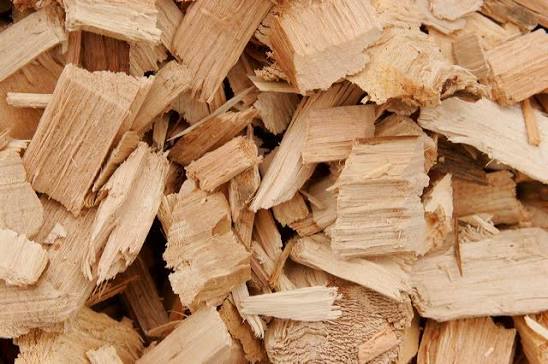
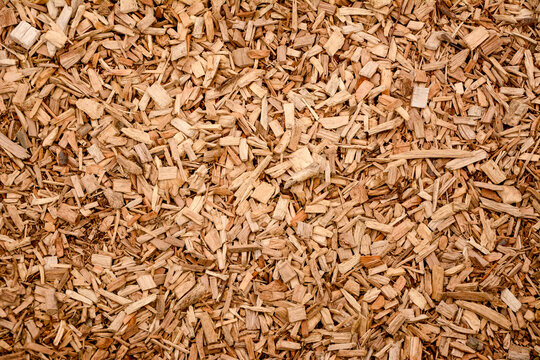
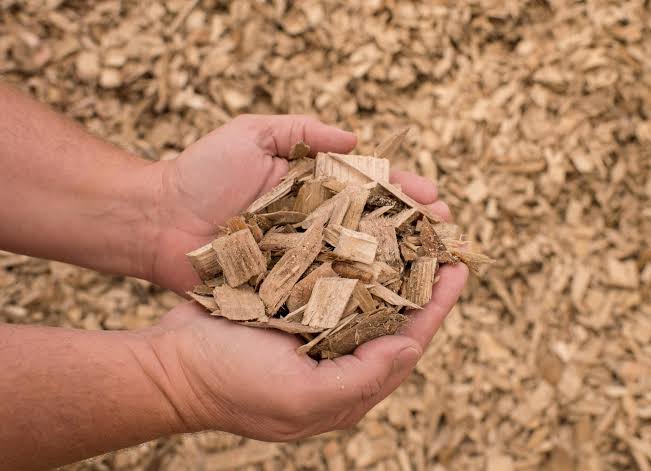
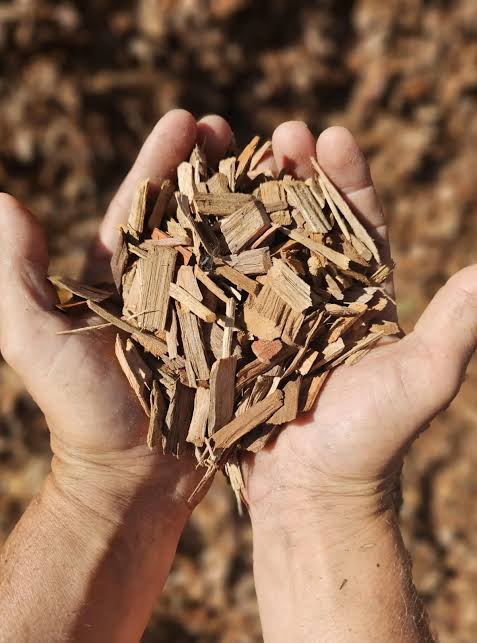
We produce screened wood chips in a range of particle sizes for biomass energy, landscaping and industrial use. Chips are sourced from both forestry residues and sawmill by-product, screened to remove oversize and fines, and loaded loose in bulk or in big bags depending on your handling equipment.
Product checks, samples and pricing are handled directly by our export team on WhatsApp for the fastest response.
We produce screened wood chips in a range of particle sizes for biomass energy, landscaping and industrial use. Chips are sourced from both forestry residues and sawmill by-product, screened to remove oversize and fines, and loaded loose in bulk or in big bags depending on your handling equipment.
Particle size and moisture can be tailored to your equipment — finer, drier chips for combustion boilers, or coarser chips for mulching and bedding applications. Let us know your end use so we can screen the right grade for your order.
Wood chips are the most versatile product in our range, moving from forestry residue and sawmill by-product into markets as different as biomass power generation and municipal landscaping. This overview explains how our wood chips are produced and graded, and how truckload and container export to European markets typically works.
Wood chips are produced by mechanically chipping roundwood, forestry residue and sawmill offcuts into small, uniform pieces, then screening the output to remove oversize material and fines. The result is graded by particle size class under EN ISO 17225-4, allowing buyers to specify exactly the size band their equipment or application needs — from fine, dry chips for automated boiler feed systems through to coarser material for mulching and animal bedding.
Because wood chips are bulky relative to their value, freight cost makes up a larger share of the delivered price than for pellets or briquettes. This makes Portuguese wood chips particularly cost-competitive for buyers in Spain and southern France, while buyers further north weigh freight distance against local alternative suppliers — often finding that container shipment, rather than road freight, offers the better economics for longer routes.
Spanish biomass boiler operators and landscaping buyers benefit from the shortest possible haul out of our yard, often making Portuguese wood chips price-competitive against domestic Spanish supply in northern and central regions.
France's biomass heating sector continues to expand alongside strong municipal and landscaping demand for mulch-grade chips in parks and public spaces. French buyers typically specify particle size class and moisture content precisely.
Benelux countries run a significant number of biomass boiler and small combined heat-and-power installations relying on a consistent wood chip supply chain, often sourced through multi-origin trading relationships.
Danish and other Nordic buyers operate some of Europe's most established biomass supply chains, typically sourcing through long-term contracts and container or vessel shipment given the distance from Portugal.
German industrial and municipal buyers value consistent documentation on species and moisture, while Italian demand spans both biomass energy and panel/pulp industry feedstock, particularly in northern manufacturing regions.
P16 grade material, at the finer end of our range, suits automated combustion equipment that requires small, consistent particles to avoid feed jams. Mid-range grades around P31 balance handling ease with combustion performance for a broad range of boiler types. Coarser grades up to P45, roughly 16 to 100 mm, suit landscaping, mulching and bedding applications where combustion performance is not the priority.
Fresh-cut wood chips typically carry 25% to 40% moisture, which is acceptable and often preferred for landscaping and bedding uses where lower cost matters more than combustion efficiency. For combustion buyers, we can pre-dry chips to below 30% moisture, improving calorific value and reducing the risk of self-heating or spoilage during storage — an important consideration for buyers holding stock through a full heating season.
We supply both mixed softwood/hardwood chips, the most cost-effective option for general biomass and landscaping use, and single-species runs on request for buyers with specific combustion or aesthetic requirements — for example, buyers wanting a consistent hardwood chip for higher calorific value, or a specific softwood for a particular boiler configuration.
For destinations reachable by road within a day or two — Spain, and southern and central France — truckload delivery by walking-floor trailer or tipper is usually the most cost-effective option. For buyers further north or requiring larger standing volumes, container shipment via Porto / Leixões can offer better landed economics per tonne, particularly when consolidated with other cargo or agreed as part of a longer-term supply contract.
Loose bulk delivery is the most cost-efficient method for buyers with bulk storage or direct boiler-feed infrastructure. One-tonne big bags suit buyers without bulk handling equipment, adding packaging cost per tonne but removing the need for specialised unloading equipment at the receiving site.
Biomass boiler and combined heat-and-power plant operators are our largest wood chip customer group, requiring tight particle-size and moisture control for automated feed systems. Municipal authorities and landscaping contractors buy coarser, less strictly graded material for park and garden mulching. Stable and livestock operations use larger, drier chips as animal bedding. Pulp, paper and panel-board manufacturers buy chips as raw fibre feedstock, prioritising species consistency and low contamination over precise particle sizing.
Buyers supplying installations tied to heating incentive schemes or emissions permits often need documentation on species, particle size classification and moisture content. We provide this alongside shipments on request, and can discuss chain-of-custody documentation where a buyer's certification scheme requires it.
Wood chip pricing reflects particle size grade, moisture specification, species, packaging (bulk versus big bag), and critically, freight distance given the product's relatively low value density. We recommend requesting a delivered price to your specific location, since freight often represents a larger share of total cost for wood chips than for our other, more compact product lines.
Wood chips and wood pellets both serve biomass boiler markets, but suit different scales and equipment types. Chips typically cost less per tonne to produce, since they require far less processing than pellets, making them attractive for larger installations that can accept the lower energy density and bulkier storage requirement. Pellets suit smaller or space-constrained installations where storage efficiency and automated handling matter more than raw material cost. Many biomass operators use chips for baseload heating and pellets for smaller or backup systems, so the two products often complement rather than compete with each other in a distributor's product range.
Fresh-cut wood chips with higher moisture content need adequate airflow in storage to prevent self-heating and microbial degradation, particularly when stockpiled in large volumes over summer ahead of winter use. Pre-dried chips store more predictably but still benefit from covered storage to maintain their moisture specification. Buyers with direct boiler-feed silos should confirm particle size compatibility with their feed auger or conveyor system before finalising an order, since oversize material can cause blockages.
Because "wood chips" covers such a wide specification range, we recommend starting with a conversation about your end use — combustion, landscaping or bedding — so we can recommend the right particle size grade and moisture specification before you commit to a full load. From there we confirm whether truckload or container shipment suits your destination, agree packaging (bulk or big bag), and schedule loading, typically within one to three weeks depending on volume and current screening capacity.
Wood chips make productive use of forestry residue and sawmill by-product that would otherwise require disposal, turning a waste stream into a renewable heating fuel. As with our other biomass products, wood chips sourced from managed Portuguese forestry represent a carbon cycle where emissions from combustion are offset by carbon absorbed during forest regrowth, a point increasingly relevant to buyers supplying municipal and regulated biomass heating markets across Europe.
"P-class" (such as P16, P31 or P45) refers to the EN ISO 17225-4 particle size classification, indicating the screen size the majority of chips will pass through — a higher number means a coarser, larger chip. "Fines" are the smallest fragments and dust within a batch, which should be minimised for combustion applications since excess fines can affect airflow and combustion efficiency in a boiler. "Oversize" refers to pieces larger than the specified grade, which are screened out before dispatch to protect automated feed equipment from blockages.
Given the freight economics of a bulky, lower-value product, most wood chip orders start at a full truckload to make transport worthwhile, though we can discuss smaller trial volumes for buyers close to our yard, particularly in Spain. Container shipment typically suits buyers ordering the equivalent of several truckloads at once, since consolidating volume into a single container shipment improves the cost per tonne for longer-distance destinations. Recurring biomass boiler operators often move to a standing weekly or monthly delivery schedule once initial trial loads confirm particle size and moisture performance in their specific equipment.
Though outside the EU customs union in Switzerland's case, both countries maintain strong biomass heating sectors in Alpine regions, and buyers here occasionally source Iberian wood chips to supplement domestic and Central European supply, typically via container or consolidated road freight through France.
Every batch passes through mechanical screening to remove oversize material and excess fines before dispatch, and we check moisture content against your agreed specification prior to loading. For combustion buyers with tight equipment tolerances, we can share screening and moisture results for your specific load ahead of dispatch, and for recurring buyers we keep records by production run so any quality question can be traced back to source.
Because "wood chips" spans such a wide range of specifications, our team will usually ask a few questions about your end use before quoting — combustion, landscaping or bedding — so we can recommend the right particle size grade and moisture level rather than quoting a generic product that may not suit your equipment. Reach out on WhatsApp with your destination, target volume and end use for a same-day response.
Because freight makes up such a large share of delivered wood chip pricing, comparing suppliers on ex-works price alone can be misleading. A supplier further from your site may quote a lower price per tonne at the yard gate, but once haulage distance, fuel surcharges and any consolidation costs are added, the total landed cost can end up higher than a nearer supplier with a slightly higher headline price. We always recommend requesting delivered pricing to your exact destination, and we're happy to break down the freight and product cost separately so you can see exactly where your money is going and compare it fairly against other quotes you've received.
Buyers new to importing wood chips from Portugal often ask about practical handling details beyond the core specification: whether we can schedule delivery to a specific time window (yes, for regular routes we can usually agree a delivery day, though exact time can vary with traffic and border conditions), whether part-loads are possible for buyers not yet ready for a full truckload (occasionally, though full truckloads remain the most cost-efficient option), and how far in advance to book during peak winter demand (at least three to four weeks is advisable once the heating season is underway).
Screening to your specified particle size and moisture band, offering both truckload and container export, and drawing on both forestry residue and sawmill by-product gives us the flexibility to match wood chip specification and price to a wide range of end uses, from combustion fuel through to landscaping mulch.
| Particle size grade | P16–P45 (16–100 mm) per EN ISO 17225-4 |
| Moisture content | 25–40% fresh-cut, below 30% pre-dried on request |
| Species | Mixed softwood/hardwood, or single-species runs on request |
| Ash content | Below 1.5% |
| Packaging options | Loose bulk by truck or container, or 1,000 kg big bags |
| Minimum order | 1 truckload; container loads available for maritime export |
| Loading port | Porto / Leixões, Portugal |
We supply grades from P16 up to P45 (roughly 16–100 mm) following EN ISO 17225-4 classification, screened to your specified size for boiler feedstock or landscaping use.
Yes, we can pre-dry chips to below 30% moisture for combustion applications; fresh-cut chips at natural moisture (25–40%) are also available and typically cost less.
Yes, in addition to truckload deliveries within Europe we prepare container loads for maritime export from Porto / Leixões.
Coarser, screened chips from our landscaping grade are commonly used for animal bedding — tell us the application and we'll recommend the right specification.
Kiln-dried & seasoned beech, oak and pine firewood logs, cut and split to order for wholesale and export.
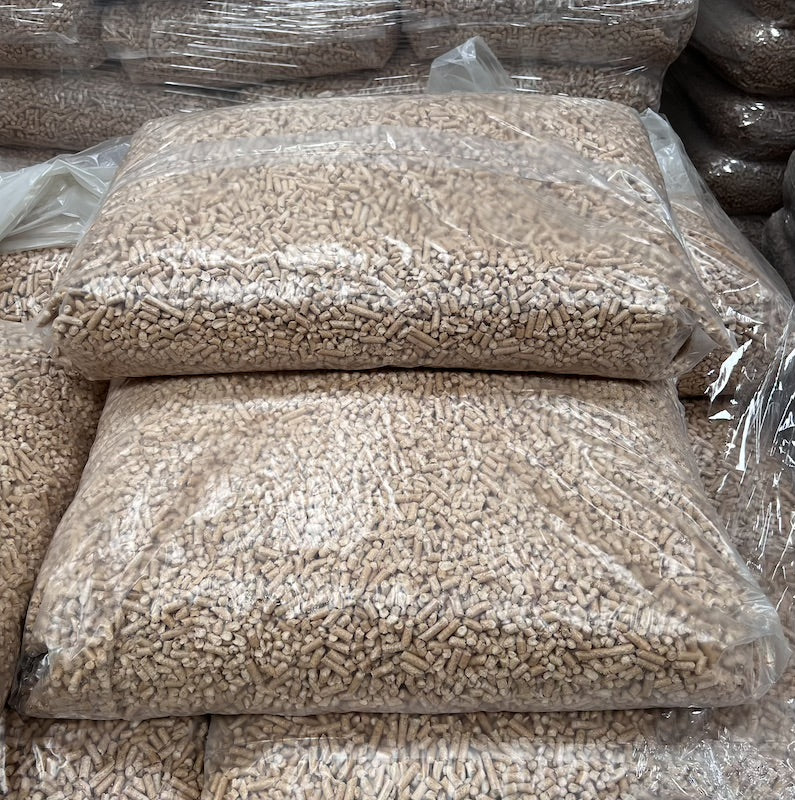
High-density, low-moisture wood pellets pressed from virgin softwood sawdust for clean, efficient heating.
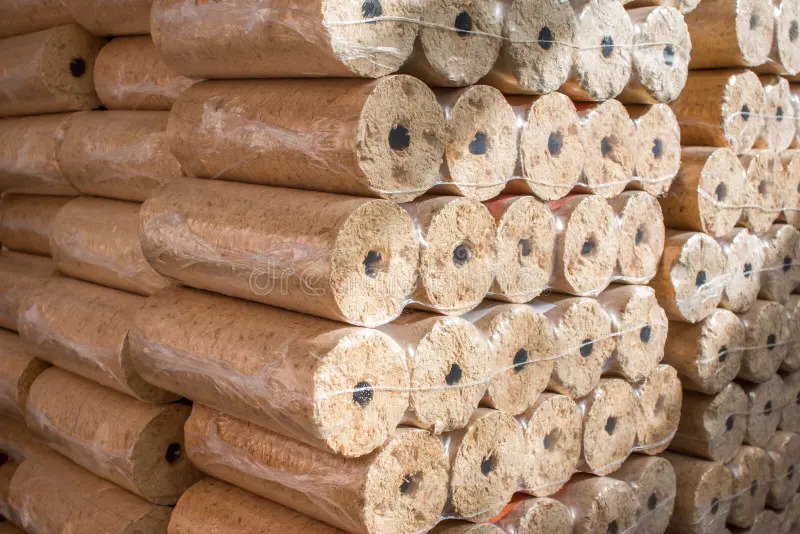
Compressed hardwood briquettes (RUF & Nestro types) offering long, steady, low-ash burn time.
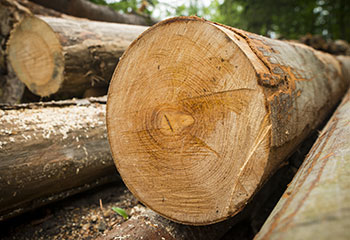
Rough-sawn timber, planed beams and roundwood logs sourced from certified Portuguese forests.
Send us your target volume and destination for a wholesale quotation.