Best Seller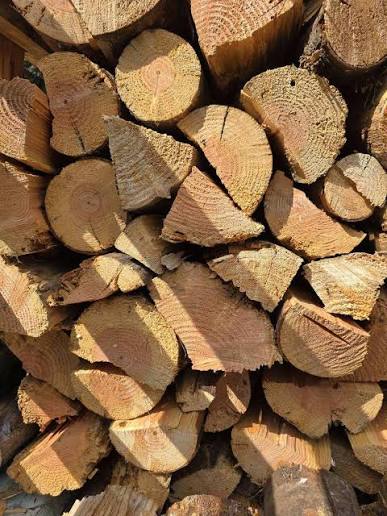
Firewood
Kiln-dried & seasoned beech, oak and pine firewood logs, cut and split to order for wholesale and export.
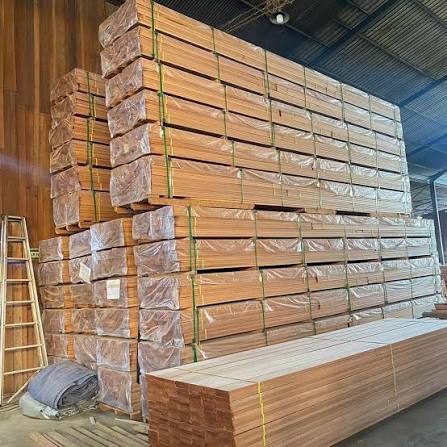
Durable, weather-resistant Iroko hardwood lumber, stocked and distributed for outdoor joinery, decking and furniture.
Iroko is a naturally durable West African hardwood, long used across Europe as a cost-effective alternative to teak for outdoor joinery, decking and furniture. We stock and distribute kiln-dried Iroko lumber from our Rebordosa facility, sourced through vetted international timber trade partners, for wholesale buyers who need a weather-resistant hardwood without teak's premium price point.
Product checks, samples and pricing are handled directly by our export team on WhatsApp for the fastest response.
Iroko is a naturally durable West African hardwood, long used across Europe as a cost-effective alternative to teak for outdoor joinery, decking and furniture. We stock and distribute kiln-dried Iroko lumber from our Rebordosa facility, sourced through vetted international timber trade partners, for wholesale buyers who need a weather-resistant hardwood without teak's premium price point.
Because Iroko is not grown in Portugal, we source it through established, vetted international timber trading partners and hold stock at our Rebordosa yard, giving European buyers the convenience of an EU-based intra-community purchase rather than managing direct import themselves.
Iroko is one of the most established durable hardwoods in the European outdoor timber trade, valued for decades as a cost-effective, naturally weather-resistant alternative to teak. This overview explains what makes Iroko suitable for outdoor and marine applications, and how we source and distribute it to European wholesale buyers from our Rebordosa facility.
Iroko (Milicia excelsa) is a large West African hardwood tree, harvested and sawn into lumber prized for its natural durability, stability and resistance to rot, insect attack and weathering without chemical treatment. Its colour ranges from golden-yellow to deep brown, darkening further with age and UV exposure, and it machines and finishes well despite its density — qualities that have made it a long-standing European joinery and decking staple.
Teak has traditionally been the benchmark durable hardwood for outdoor use, but rising cost and sourcing concerns around teak supply have pushed many joinery manufacturers, decking installers and boat builders toward Iroko as a comparable-performing, more accessible alternative. Its Class 1 natural durability rating means it can be used outdoors without chemical preservative treatment, appealing to buyers and end customers who prefer to avoid treated timber.
Because Iroko is not native to Portugal, we source it through established, vetted timber trading partners with experience in West African hardwood supply chains, then hold and distribute stock from our Rebordosa yard. For European buyers, this means purchasing Iroko as a straightforward intra-EU transaction from a supplier you already have a relationship with, rather than separately establishing an import relationship with an origin-country exporter, managing unfamiliar documentation, or meeting a distant supplier's own minimum order requirements.
France has one of Europe's most established markets for Iroko, widely used in outdoor joinery and decking, with buyers typically specifying FAS or FEQ grade depending on the visual finish required.
Benelux joinery and decking manufacturers are long-standing Iroko buyers, valuing its dimensional stability in the region's variable outdoor climate compared with less naturally durable species.
Southern European outdoor furniture and decking manufacturers use Iroko where UV and moisture resistance are priorities, particularly for premium outdoor furniture lines.
The UK has a long history of Iroko use in joinery and marine applications; buyers here typically require full documentation on species and sourcing given increased scrutiny of timber import compliance post-Brexit.
FAS (First and Seconds) is the higher grade, with larger clear sections and fewer defects, suited to visible joinery, furniture and decking where appearance matters. FEQ (Fair Export Quality) allows for more natural character and minor defects, suited to structural or less visually critical applications where cost efficiency is a priority. Confirming which grade fits your application before ordering avoids paying a premium for appearance you don't need, or receiving material that doesn't meet your visual standard.
FAS (First and Seconds) is the higher grade, with larger clear sections and fewer defects, suited to visible joinery, furniture and decking where appearance matters. FEQ (Fair Export Quality) allows for more natural character and minor defects, suited to structural or less visually critical applications where cost efficiency is a priority. Confirming which grade fits your application before ordering avoids paying a premium for appearance you don't need, or receiving material that doesn't meet your visual standard.
Teak remains the best-known durable hardwood for marine and outdoor use, but rising cost, tighter sourcing controls and long-running sustainability concerns around some teak supply chains have made it increasingly difficult for many European buyers to source at scale. Iroko offers comparable Class 1 natural durability at a typically lower price point, with similar dimensional stability once properly kiln-dried. Other durable alternatives such as Accoya or thermally modified timber require chemical or thermal treatment to achieve similar performance, whereas Iroko's durability is entirely natural, which some buyers and end customers specifically prefer.
Iroko machines well despite its density, though like many tropical hardwoods it can contain natural deposits that occasionally blunt tooling faster than temperate species — worth factoring into blade maintenance schedules for high-volume joinery production. Left untreated, Iroko weathers to an attractive silver-grey patina outdoors, or can be oiled periodically to maintain its golden-brown colour; either approach is low-maintenance compared with softwoods requiring regular chemical treatment to achieve similar service life.
Decking is one of Iroko's most common uses across Europe, prized for holding up to weather exposure without warping or rotting over many years. External joinery — window frames, doors and cladding — benefits from the same natural durability, reducing long-term maintenance compared with treated softwood alternatives. Outdoor and marine-grade furniture manufacturers use Iroko for its combination of strength, stability and weather resistance. Boat builders have used Iroko for decades in structural and trim applications where rot resistance below the waterline and in wet conditions is essential.
Kiln-drying to approximately 12% moisture gives Iroko lumber good dimensional stability for European climates, reducing movement and checking after installation compared with green or partially dried stock. This is particularly important for joinery applications like window and door frames, where dimensional accuracy affects fit and function long after installation.
We check incoming Iroko stock against agreed grade and moisture specification before it enters distribution, and can provide available sourcing documentation for buyers whose markets require it — worth confirming your specific documentation requirement, particularly for UK-bound shipments, at the quotation stage.
Iroko pricing reflects grade, dimension, global raw material availability and freight, and typically sits below teak while offering comparable outdoor performance for most applications. As with our other timber products, request a delivered quote to your specific destination for accurate comparison against alternative durable hardwood suppliers.
Standard wholesale Iroko orders start at one truckload, with container shipment the more practical option for buyers further afield, including the UK. Because Iroko stock levels can vary with global supply conditions, we recommend confirming current availability and lead time for your required grade and dimensions before finalising project timelines, particularly for larger joinery or decking contracts with fixed delivery deadlines.
Sourcing transparency matters particularly for tropical hardwoods like Iroko, where European buyers increasingly need to demonstrate legal and responsible origin to their own customers and, for larger businesses, under EU deforestation-related import regulation. We work only with established, vetted trading partners in our Iroko supply chain and can share what origin and legality documentation is available for a specific batch — worth raising early if your market has a specific compliance requirement, since not all volumes carry the same documentation depth.
When comparing our Iroko pricing against another supplier, confirm that grade (FAS versus FEQ) and moisture specification match exactly, since these two factors drive most of the price variation between quotes that otherwise look similar on paper. A lower-priced FEQ quote is not directly comparable to our FAS pricing, and vice versa — we're happy to quote both grades side by side so you can compare on a genuinely equal basis.
Buyers new to sourcing Iroko through a Portugal-based supplier often ask practical questions about scheduling and stock. How far ahead should larger decking or joinery contracts be planned? Four to six weeks is advisable given global supply variability for this species. Can partial-container orders be arranged? Sometimes, particularly when consolidated with other outbound cargo on the same route — worth asking when you request your quote. Is documentation prepared in advance for UK-bound shipments? Yes, we prepare customs and phytosanitary paperwork ahead of loading to minimise delay at the border.
What distinguishes Iroko from many alternative durable species is its track record: it has been used in European outdoor joinery and marine applications for well over half a century, giving buyers a genuinely long body of real-world performance data rather than relying on accelerated laboratory durability testing alone, as is often the case with newer modified-timber alternatives. Decking and joinery installed decades ago in some cases remains in serviceable condition today, which is the strongest practical argument for its Class 1 durability rating holding up under real outdoor exposure rather than just controlled test conditions.
Iroko's resistance to rot and insect attack even in wet, humid conditions has made it a long-standing choice in boat building, particularly for trim, decking and structural elements above the waterline where weight and workability matter alongside durability. Its dimensional stability once properly kiln-dried also reduces the movement and gap-opening that can affect less stable species when exposed to the constant wetting and drying cycle typical of marine use, an important practical consideration for boat builders working to tight fit tolerances.
External window and door frames represent one of the most demanding applications for any timber species, combining constant weather exposure with the need for precise, long-term dimensional stability to keep hardware functioning correctly for years. Iroko's natural durability reduces the maintenance burden compared with treated softwood frames, while its stability after kiln-drying helps frames continue opening, closing and sealing correctly well beyond the service life many alternative species achieve in the same application.
Because Iroko is sourced internationally rather than grown locally, larger decking, joinery or boat-building projects benefit from confirming stock and lead time well before a fixed installation date is set, rather than assuming material will be available on short notice close to a project deadline. We're happy to discuss a project's timeline early, even before final dimensions are confirmed, so we can flag whether current stock and lead time comfortably fit your schedule or whether an earlier order would be prudent.
Distributors and joinery manufacturers who already buy Portuguese-grown timber, firewood or biomass products from us sometimes add Iroko to an existing order to consolidate freight, particularly for buyers importing into markets like the UK where customs handling is simpler to manage as a single combined shipment rather than several separate ones. Worth raising at the quotation stage if this applies to your business.
For a first order of any meaningful size, we'd encourage requesting photographs or a short video of the actual bundles being prepared for your shipment, not just a generic product photo, so you can confirm grade and finish match what you expect before the truck or container leaves our yard. This small extra step costs nothing and has saved more than one new customer an awkward conversation after delivery.
Given the scrutiny tropical hardwood sourcing rightly attracts across Europe, we treat traceability as a standing part of how we vet Iroko trading partners, not just a box to tick when a specific buyer asks. If sourcing documentation is central to your own compliance process, tell us early and we'll confirm exactly what we can provide before you commit to volume.
Holding Iroko stock within the EU alongside our Portuguese-grown timber and biomass lines lets buyers combine a durable hardwood order with other product lines on the same freight lane, simplifying procurement for distributors and joinery manufacturers who need more than one wood product from a single, reliable supplier.
| Species | Iroko (Milicia excelsa), West African hardwood |
| Durability class | Class 1 — naturally resistant to rot, insects and weathering |
| Moisture content | Kiln-dried to approximately 12% |
| Grades available | FAS (First and Seconds) and FEQ (Fair Export Quality) |
| Typical uses | Decking, outdoor joinery, furniture, boat building, cladding |
| Packaging | Bundled and strapped, kiln-dried stacks |
| Minimum order | 1 truckload; container loads available for export |
Yes, Iroko is widely used across Europe as a more accessible, cost-effective alternative to teak for outdoor joinery, decking and furniture, offering comparable natural durability without chemical treatment.
FAS grade suits visible joinery, furniture and decking where appearance matters; FEQ grade suits structural or less visually critical applications where cost efficiency is the priority.
We source Iroko through vetted international timber trading partners and hold stock at our Rebordosa facility for straightforward intra-EU distribution to European buyers.
Standard wholesale orders start at one truckload, with container loads available for buyers further afield, including the UK.
Kiln-dried & seasoned beech, oak and pine firewood logs, cut and split to order for wholesale and export.
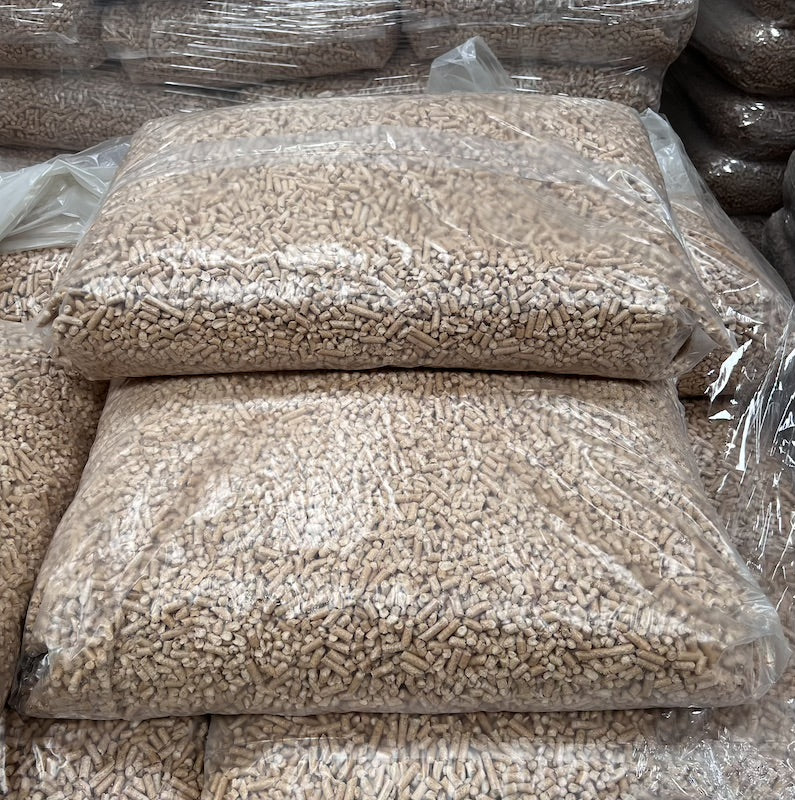
High-density, low-moisture wood pellets pressed from virgin softwood sawdust for clean, efficient heating.
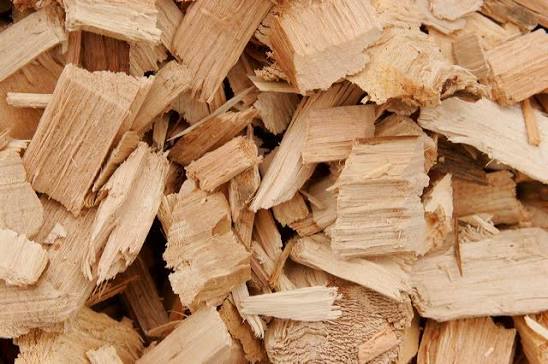
Uniform biomass and landscaping wood chips, screened to size for boilers, mulching and animal bedding.
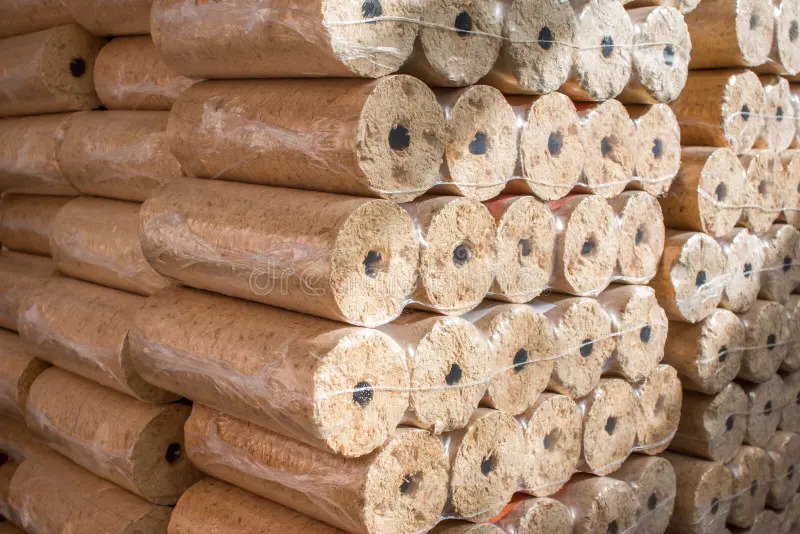
Compressed hardwood briquettes (RUF & Nestro types) offering long, steady, low-ash burn time.
Send us your target volume and destination for a wholesale quotation.