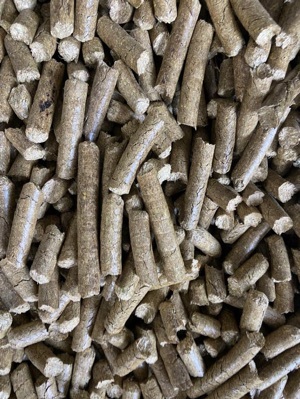
Wood pellets move through European supply chains differently to almost any other wood product: by big bag, by bulk tanker, and increasingly by rail or short-sea shipping into major heating markets. For a distributor evaluating a Portuguese pellet supplier, the logistics questions are usually about consistency, moisture protection in transit, and whether volumes can scale with the heating season. Here's what to expect.
Why European Buyers Look to Portugal for Pellets
Portugal's softwood forestry base, combined with sawmill by-product from the country's timber industry, supports a steady supply of the clean, low-bark sawdust that makes the best feedstock for ENplus-grade pellets. For buyers already sourcing sawn timber or firewood from Portuguese suppliers, adding pellets to the same freight lane can improve overall logistics efficiency.
France: A Fast-Growing Pellet Stove Market
France has seen sustained growth in residential pellet stove and boiler installations, driven by incentives to move away from fossil heating. French wholesalers typically buy in 15 kg retail bags for the DIY and garden-centre channel, alongside big-bag volumes for installers supplying central-heating boiler customers.
Italy: Established Pellet Culture
Italy has one of the most mature residential pellet markets in Europe, with pellet stoves a standard heating appliance in many regions. Italian buyers are typically well informed on ENplus specification and expect tight consistency on diameter, fines content and moisture from shipment to shipment.
Germany and Central Europe
German demand spans both residential heating and larger commercial biomass boiler installations, with buyers often requesting DINplus alongside ENplus documentation. Bulk tanker delivery is common for larger commercial and municipal heating customers in this market.
Belgium and the Netherlands
Benelux buyers commonly split orders between bagged product for retail distribution and big-bag volumes for commercial and light-industrial boiler customers, with strong demand concentrated in the autumn restocking period.
Denmark and the Nordic District Heating Market
Nordic countries operate some of Europe's largest district heating networks, many of which run partly or wholly on wood pellets and other biomass fuel. These buyers typically purchase in bulk vessel or large tanker quantities, with quality specifications set by long-term supply contracts rather than spot orders.
Packaging Choices and What They Mean for Import Cost
Fifteen-kilogram bags on pallets suit retail and small-installer channels but carry a higher per-tonne packaging cost. One-tonne big bags reduce packaging cost and suit mid-size commercial boiler customers with forklift handling. Bulk tanker delivery offers the lowest cost per tonne but requires a silo or bulk storage system at the receiving end — worth factoring into your total landed-cost comparison, not just the quoted price per tonne.
Moisture Protection During Cross-Border Transport
Pellets are sensitive to moisture pickup, which can cause swelling and breakdown into fines if bags are damaged or stored improperly in transit. We load pellets under cover and recommend moisture-protected big bags or tanker delivery for buyers in damper northern European climates, particularly for longer transit routes.
Certification Documentation for Import
Buyers in regulated heating markets often need to show ENplus or DINplus documentation to their own customers or to qualify for local heating incentive schemes. We can supply certificates of analysis for each production batch — it's worth confirming exactly what documentation your market requires before your first order ships.
Planning Volumes Around the Heating Season
Like firewood, pellet demand is strongly seasonal. Distributors who place standing orders or forward contracts before the autumn restocking rush generally secure more stable pricing and guaranteed truckload or container availability than those buying spot in peak season.
Requesting a Wholesale Pellet Quote
Tell us your target country, expected annual volume and preferred packaging format — bagged, big bag or bulk — and we'll put together delivered pricing for your market alongside our current ENplus specification sheet.
Have a Question for Our Team?
Ask about pricing, volumes or specifications on WhatsApp.