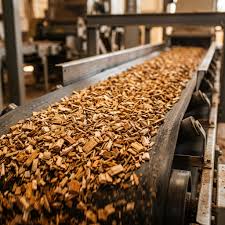
Wood chips are a high-volume, low-margin-per-tonne product, which means transport economics matter more here than for almost any other wood product line. Getting the logistics right — truckload versus container, bulk versus big bag — is often the difference between a competitive delivered price and one that prices you out of a tender. Here's how Portuguese wood chip export typically works for buyers across Europe.
Why Distance and Density Drive Wood Chip Pricing
Because wood chips are bulky relative to their value, freight cost as a share of the delivered price is higher than for pellets or briquettes. This makes Spain and southern France the most cost-efficient destinations for Portuguese wood chips, while buyers further north in Belgium, the Netherlands or Denmark need to weigh freight cost against local alternative suppliers.
Spain: Short-Haul Biomass Supply
Spanish biomass boiler operators and landscaping buyers benefit from the shortest possible haul out of our Rebordosa yard, often making Portuguese wood chips price-competitive against domestic Spanish supply, particularly for buyers in northern and central Spain.
France: Biomass Boiler and Landscaping Demand
France's biomass heating sector continues to expand, alongside strong municipal and landscaping demand for mulch-grade chips in parks and public spaces. French buyers typically specify particle size class and moisture content precisely, in line with EN ISO 17225-4 grading.
Belgium and the Netherlands: District Heating and Industry
Benelux countries run a significant number of biomass boiler and small CHP installations that rely on a consistent wood chip supply chain, often sourced through multi-origin trading relationships that include Iberian suppliers alongside domestic and Baltic sources.
Denmark and Northern Biomass Markets
Danish and other Nordic buyers operate some of the most established biomass supply chains in Europe, typically sourcing through long-term contracts and container or vessel shipment rather than single truckloads, given the distances involved from Portugal.
Truckload vs Container: Choosing the Right Export Method
For destinations reachable by road within a day or two — Spain, southern and central France — truckload delivery is usually the most cost-effective option. For buyers further north or requiring larger standing volumes, container shipment via Porto / Leixões can offer better economics per tonne, particularly when consolidated with other cargo.
Particle Size and Moisture Specification by End Use
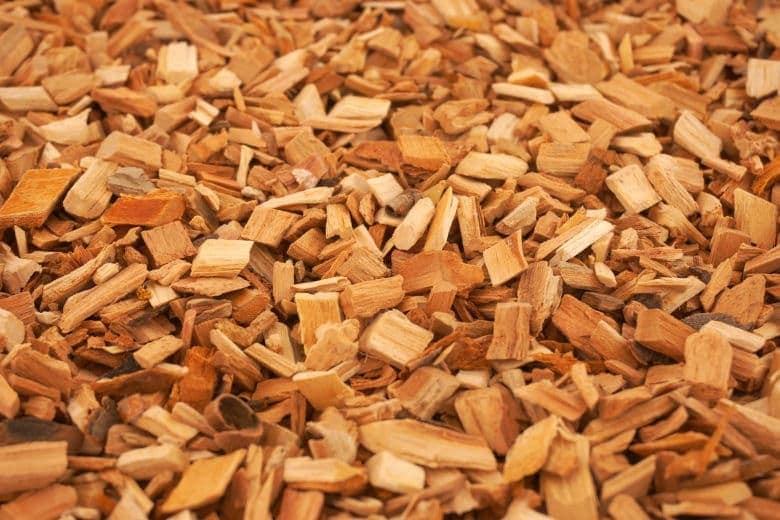
Combustion buyers generally require a tighter particle-size band (commonly P16 to P45) and controlled moisture to protect automated boiler feed systems, while landscaping and mulch buyers can typically accept a wider size range and higher natural moisture content, which usually means a lower delivered price.
Bulk vs Big Bag Handling
Loose bulk delivery by walking-floor trailer or tipper is the most cost-efficient method for buyers with bulk storage or direct boiler-feed infrastructure. Big bags suit buyers without bulk handling equipment but add packaging cost per tonne — worth comparing against your own site's unloading capability before choosing.
Documentation for Biomass Fuel Buyers
Buyers supplying regulated biomass heating installations often need documentation on species, particle size classification and moisture content to satisfy fuel-quality requirements tied to heating incentives or emissions permits. We can provide this alongside each shipment on request.
Requesting a Wood Chip Export Quote
Send us your destination country, required particle size grade, moisture specification and preferred delivery method (truckload, container or big bag) and we'll put together a delivered price comparison so you can weigh Portuguese supply against your current sourcing.
Have a Question for Our Team?
Ask about pricing, volumes or specifications on WhatsApp.